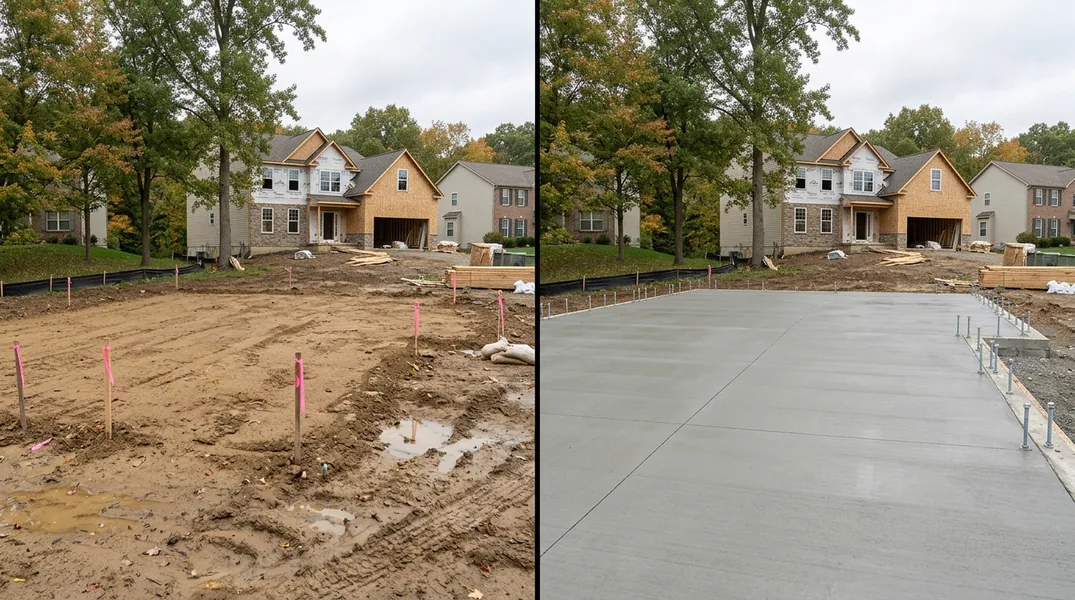
Understanding New Construction Concrete Slabs in Akron
Purchasing a new home is one of the biggest investments you'll make, and the foundation is arguably the most critical component. If you're buying a new construction property in Akron, understanding the concrete slab beneath your home is essential before you sign closing papers. A properly installed concrete slab provides structural support, protects against moisture infiltration, and sets the stage for the longevity of your entire home.
New construction concrete slabs in the Akron area are typically four to six inches thick and sit directly on compacted soil and gravel base layers. The quality of the soil preparation, concrete mix design, and installation technique all directly impact how your slab will perform over decades. Many homebuyers don't realize that issues discovered after closing can be expensive and difficult to remedy, making a pre-closing inspection invaluable.
What to Look for During Builder Foundation Inspection
A thorough builder foundation inspection is your first line of defense against future problems. Before closing, walk the property with a trained eye and look for visible cracks in the concrete slab. Small hairline cracks (less than 1/8 inch wide) are often normal as concrete cures, but larger cracks, especially those wider than 1/4 inch or those that run in patterns, warrant closer examination. Additionally, check for areas where the concrete appears to be settling unevenly or where you notice gaps between the slab and the foundation walls.
Pay attention to moisture indicators as well. Look for water stains, efflorescence (a white powdery residue), or any signs of dampness in the basement or crawlspace. These can indicate poor drainage, inadequate vapor barriers, or cracks that allow water infiltration. In the Akron region, where seasonal moisture fluctuations are common, proper slab preparation and waterproofing are critical. Ask your builder for documentation showing that a vapor barrier was installed beneath the slab and that the base was properly compacted before the concrete was poured.
New Home Basement and Slab Moisture Management
Moisture control is one of the most overlooked aspects of new home concrete slabs, yet it's one of the most important for long-term durability. A quality concrete slab should include a vapor retarder or vapor barrier installed directly beneath the concrete, typically a 6-mil polyethylene sheet. This barrier prevents groundwater and soil moisture from wicking up through the slab into your home, which can lead to mold, musty odors, and damage to flooring materials.
Beyond the vapor barrier, proper grading and drainage around the perimeter of your home are essential. The soil should slope away from the foundation at a minimum grade of one percent (one foot of drop for every 100 feet of distance). If water pools near your foundation or if you see signs of poor drainage, these issues should be addressed before closing. In areas like Cuyahoga Falls and surrounding communities, spring snowmelt and heavy rains can put significant stress on inadequate drainage systems. Verify that your builder installed perimeter drainage systems, gutters, and downspout extensions that direct water at least four to six feet away from the foundation.
Identifying Structural Concerns Before You Close
Structural issues with a concrete slab can be costly to repair after the fact, so identifying them during the pre-closing walkthrough is crucial. Look for evidence of differential settlement, which occurs when different sections of the slab settle at different rates. This often appears as a noticeable slope or as cracks that follow a stair-step pattern along mortar joints if the slab is adjacent to brick or block. Severe settlement can affect the alignment of doors and windows and may indicate inadequate soil preparation or poor compaction before the concrete was poured.
Another red flag is concrete that appears to have been poured in cold weather without proper curing procedures. Cold weather concrete can be weak and prone to cracking and scaling. Ask your builder about the date the slab was poured and what weather conditions existed at the time. If the slab was installed during freezing temperatures without adequate protection or curing compounds, durability may be compromised. Additionally, inspect the concrete surface for spalling (flaking or chipping), which can indicate freeze-thaw damage or poor concrete quality. If you notice any of these issues, consider hiring an independent concrete specialist to evaluate the slab before closing.
When to Call a Professional Concrete Specialist Near Me
While a visual inspection can reveal obvious problems, hiring a professional concrete inspector or engineer before closing provides peace of mind and expert documentation. A qualified specialist can perform non-destructive testing, assess concrete strength, check for proper slope and drainage, and identify potential issues that an untrained eye might miss. In Cuyahoga Falls, Stow, and throughout the Akron region, professional concrete inspectors understand local soil conditions, climate challenges, and building codes specific to Ohio.
If your inspection reveals minor issues like small cracks or areas where Concrete Repair and Resurfacing might be needed in the future, you can factor these into your closing negotiations or budget. For more significant structural concerns, you may want to request that the builder address them before you take possession. Don't hesitate to contact Akron Concrete Pros at (234) 901-3099 to discuss any concerns you have about your new construction slab. We can provide professional guidance and help you understand what's normal and what requires attention.
Questions to Ask Your Builder Before Closing
Come prepared to closing with specific questions about your concrete slab. Ask your builder for the concrete mix design and specifications, including the strength rating (PSI) and any additives used. Request documentation that shows the slab was installed according to industry standards and local building codes. Find out what testing was performed on the concrete (such as slump tests or compressive strength tests) and ask to see the results. Understanding these details gives you confidence that your slab meets quality standards.
Also inquire about the warranty on the concrete slab itself. Most builders offer a one-year structural warranty on new homes, but concrete warranties may vary. Ask specifically what the builder will cover if cracks appear or if moisture problems develop within the first year. Get these commitments in writing. Additionally, ask about the builder's experience with concrete work in the Akron area and whether they've had any issues with previous slab installations. A builder with a strong track record and a willingness to answer detailed questions is more likely to have done the job right. If you have any lingering doubts, reach out to Akron Concrete Pros for a free estimate and professional assessment before you close.
Looking for a professional concrete contractor in Akron? Akron Concrete Pros responds fast for all your concrete needs.
Get a Free QuoteOur services: Concrete Driveways · Concrete Patios · Stamped & Decorative Concrete